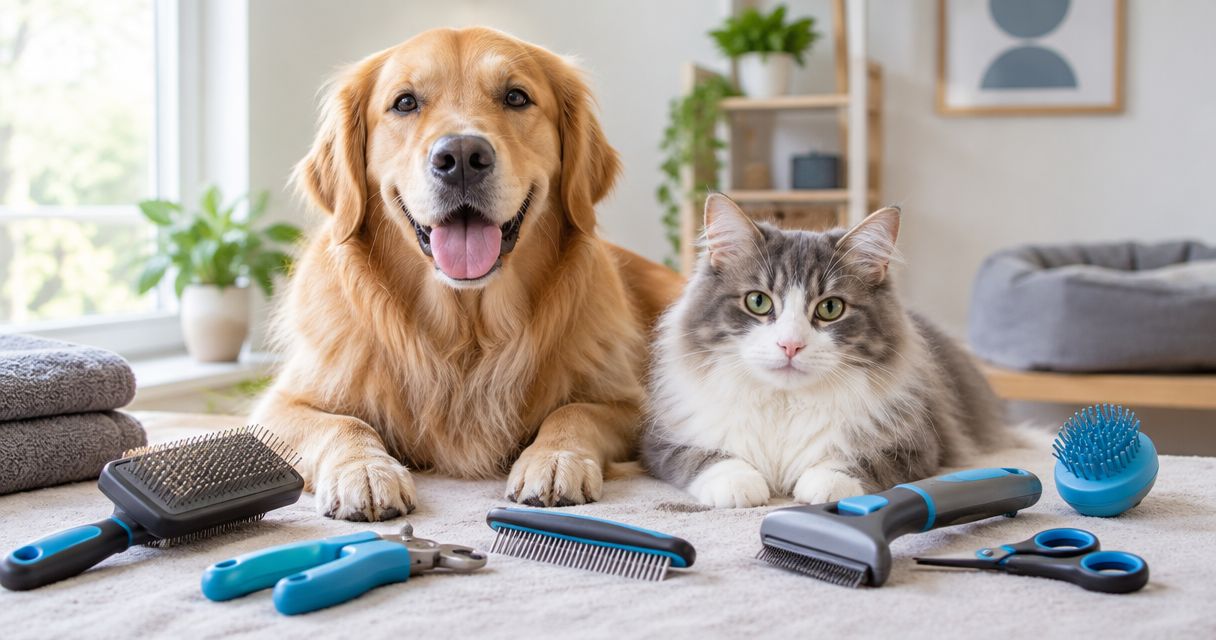
Best overall for tangle-prone coats: a slicker brush. Best for short coats: a rubber curry brush. Best starter-kit addition: a metal grooming comb. These are the best pet grooming tools to consider in 2026, followed by specialist options for shedding, nails, and flea checks.
- The best pet grooming tools match your pet’s coat; a slicker brush is the default for tangle-prone hair.
- Rubber curry brushes suit short coats; metal grooming combs help find tangles that brushing leaves behind.
- Choose pet nail clippers for a direct cut or a nail grinder for gradual shaping.
- Jlamazingdeals serves budget-conscious shoppers; select dog grooming and cat grooming tools by task, not kit size.
Jlamazingdeals serves budget-conscious US shoppers across pet supplies and other merchandise. This guide ranks tool types rather than unverified product models, so you can judge individual listings against your pet’s actual needs.
Why this matters
A brush that works on a short-haired dog is not automatically right for a long-haired cat. Coat length, density, tangles, and handling tolerance determine which tool belongs in your kit. More attachments do not fix a poor match.
For your 2026 starter kit, choose 2 coat tools: a suitable brush and a finishing comb. Add 1 nail tool if you can handle your pet’s paws safely. Those are kit-building recommendations, not a requirement to use every tool at every session.
Jlamazingdeals pet grooming shoppers should compare the working surface, intended coat type, and cleaning instructions before choosing. A product photo alone cannot establish how gently a tool contacts the skin.
What makes the best pet grooming tools?
- Coat match: Short coats need different contact surfaces from long or dense coats.
- Skin contact: Rounded tips and controlled pressure matter more than aggressive hair removal.
- Task fit: Separate detangling, loose-hair removal, nail care, and flea inspection.
- Handling: Choose a grip and head size you can control around sensitive areas.
- Cleaning: Check whether you can remove trapped hair and clean the working surface.
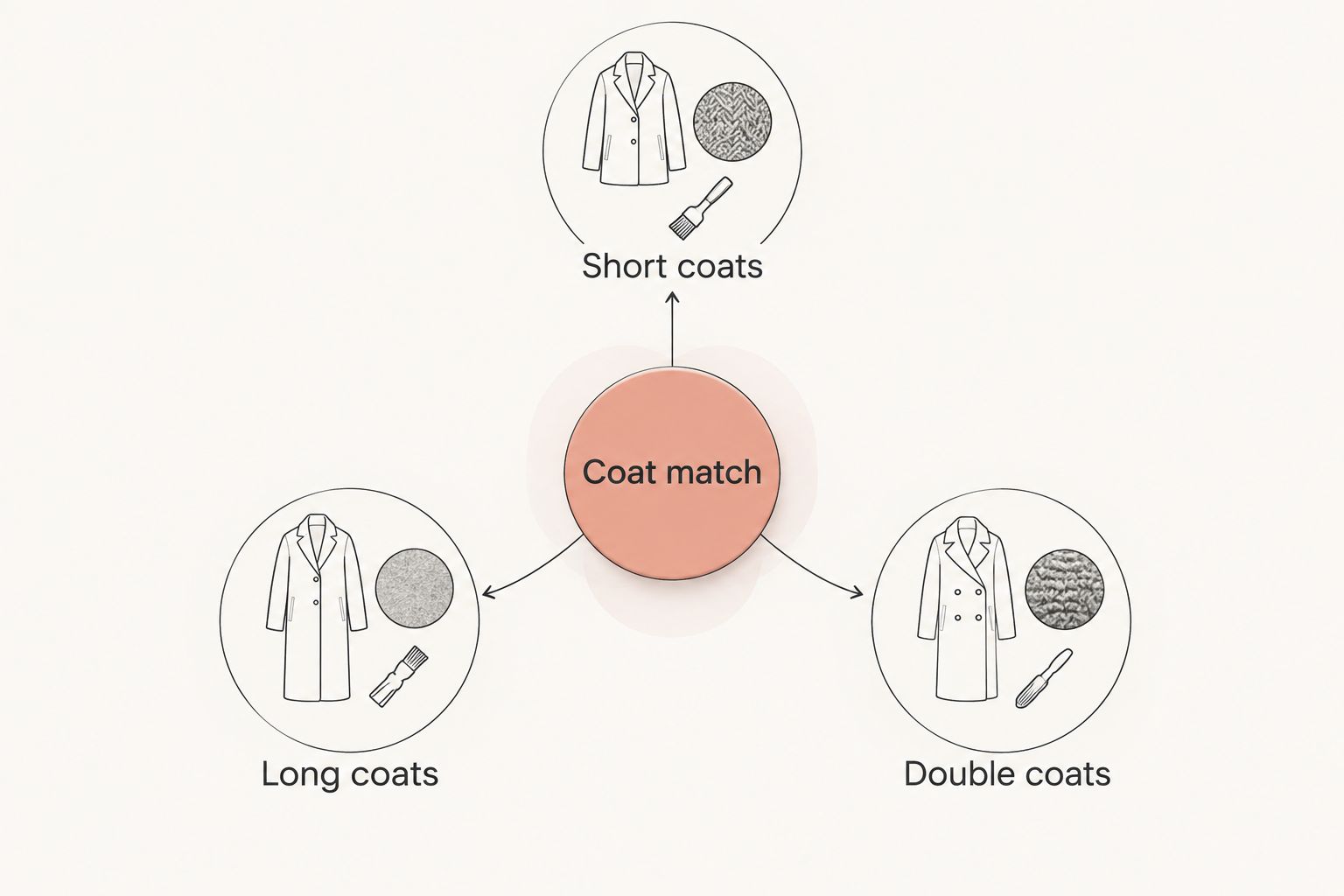
Use coat type as your first filter: Short coats, Long coats, and Double coats need different brush choices. Then account for your pet’s skin condition and tolerance; stop if grooming causes pain or distress.
Best pet grooming tools at a glance
The 2026 ranking below assigns each tool a distinct job. Read the limitation before choosing; a useful grooming tool still has situations where it does not belong.
| Rank and tool | Best for | Standout function | Key limitation |
|---|---|---|---|
| 1. Slicker brush | Tangle-prone coats | Fine pins separate hair | Pressure can irritate skin |
| 2. Rubber curry brush | Short, smooth coats | Flexible nubs gather loose hair | Cannot resolve deep tangles |
| 3. Metal grooming comb | Checking brushed coats | Teeth reveal remaining snags | Pulls if forced through knots |
| 4. Undercoat rake | Loose undercoat | Reaches beneath outer hair | Wrong design can damage coat |
| 5. Pin brush | Long, flowing coats | Spaced pins move through hair | Misses compact tangles |
| 6. Bristle brush | Surface finishing | Smooths the outer coat | Limited reach into dense coats |
| 7. Grooming glove | Pets accepting hand contact | Collects loose surface hair | Not a detangling tool |
| 8. Pet nail clippers | Controlled nail shortening | Makes a direct cut | Can cut the quick |
| 9. Pet nail grinder | Gradual nail shaping | Removes nail incrementally | Noise and vibration need acclimation |
| 10. Flea comb | Flea and debris checks | Closely spaced teeth inspect hair | Does not treat an infestation |
1. Slicker brush: best for tangle-prone coats
A slicker brush uses fine pins to separate hair and collect loose fur. Work gently through small sections, without dragging the pins repeatedly over the same skin. Tight mats need professional attention, not harder brushing.
Best for: Dogs and cats with tangle-prone coats that tolerate brushing.
Slicker brush pros:
- Separates strands during brushing.
- Collects loose hair.
- Works section by section.
Slicker brush cons:
- Heavy pressure irritates skin.
- Cannot safely solve every mat.
Verdict: Buy for tangle-prone hair; skip for irritated skin.
2. Rubber curry brush: best for short, smooth coats
A rubber curry brush uses flexible nubs to loosen surface hair. It is a practical starting point for short-haired pets because it does not depend on long pins reaching through the coat. Gentle pressure still matters.
Best for: Routine loose-hair removal on short, smooth coats.
Rubber curry brush pros:
- Suits short hair.
- Flexible contact surface.
- Simple manual operation.
Rubber curry brush cons:
- Limited reach through dense hair.
- Does not untangle knots.
Verdict: Buy for short coats; skip as a long-coat detangler.
3. Metal grooming comb: best for checking brushed coats
A metal grooming comb helps you find snags that a brush passes over. Comb gently after brushing, including accessible areas behind the ears and around the legs. Stop at resistance rather than pulling through it.
Best for: Finishing checks on coats long enough to comb.
Metal grooming comb pros:
- Reveals remaining tangles.
- Allows precise section checks.
- Has no motor noise.
Metal grooming comb cons:
- Knots can cause painful pulling.
- Fine teeth clog with dense hair.
Verdict: Buy as a finishing tool, not a forceful detangler.
4. Undercoat rake: best for loose undercoat
An undercoat rake reaches beneath outer hair to collect loose undercoat. Designs differ: inspect tooth length, spacing, and whether the working edges cut hair. Do not assume every shedding tool suits every double coat.
Best for: Double-coated pets with loose undercoat, using a suitable rake.
Undercoat rake pros:
- Reaches beneath surface hair.
- Targets loose undercoat.
- Offers coat-specific designs.
Undercoat rake cons:
- Incorrect use can damage hair.
- Excess pressure can scratch skin.
Verdict: Buy only after confirming coat compatibility.
5. Pin brush: best for long, flowing coats
A pin brush moves spaced pins through longer hair. It helps separate and arrange a flowing coat without relying on closely packed bristles. Follow with a comb because the brush can pass over hidden tangles.
Best for: General brushing of long, relatively untangled coats.
Pin brush pros:
- Moves through longer strands.
- Helps arrange the coat.
- Available with rounded tips.
Pin brush cons:
- Misses compact tangles.
- Damaged pins need replacement.
Verdict: Buy for coat maintenance; skip for tight mats.
6. Bristle brush: best for surface finishing
A bristle brush smooths outer hair and collects some loose surface fur. It is a finishing tool rather than the answer to deep shedding or tangles. Choose bristle firmness with your pet’s comfort in mind.
Best for: Smoothing an already untangled coat.
Bristle brush pros:
- Smooths outer hair.
- Collects surface debris.
- Has no mechanical noise.
Bristle brush cons:
- Cannot reach deep knots.
- Stiff bristles can irritate skin.
Verdict: Buy for finishing; skip as your only long-coat tool.
7. Grooming glove: best for pets accepting hand contact
A grooming glove collects loose hair as you stroke the coat. It suits pets that accept hand contact better than a brush, but wearing a glove does not guarantee tolerance. Let your pet inspect it before use.
Best for: Gentle surface grooming during accepted stroking.
Grooming glove pros:
- Follows your hand movement.
- Collects loose surface hair.
- Needs no motor.
Grooming glove cons:
- Does not reach deep tangles.
- Poor fit reduces control.
Verdict: Buy for accepted hand contact; skip for detangling.
8. Pet nail clippers: best for controlled nail shortening
Pet nail clippers shorten nails with a direct cut. Choose a size appropriate to the nail and keep the cutting edges in good condition. The quick contains nerves and blood vessels; ask a veterinary professional to demonstrate trimming if you cannot identify a safe cut.
Best for: Pets that tolerate steady paw handling.
Pet nail clipper pros:
- Makes a direct cut.
- Needs no charging.
- Avoids motor vibration.
Pet nail clipper cons:
- Cutting the quick hurts.
- Dull blades can crush nails.
Verdict: Buy after learning safe technique.
9. Pet nail grinder: best for gradual nail shaping
A pet nail grinder removes nail with an abrasive surface. Introduce its sound and vibration separately before attempting nail care. Keep hair away from rotating parts and avoid prolonged contact that creates heat.
Best for: Gradual shaping on pets that accept the motor.
Pet nail grinder pros:
- Removes nail incrementally.
- Smooths rough edges.
- Avoids a clipping action.
Pet nail grinder cons:
- Noise can upset pets.
- Friction generates heat.
Verdict: Buy for motor-tolerant pets; wait during acclimation.
10. Flea comb: best for flea and debris checks
A flea comb has closely spaced teeth for inspecting hair. It helps you look for fleas and debris, especially where a wider comb misses small particles. Finding fleas calls for veterinary guidance on treatment, not combing alone.
Best for: Close inspection of a manageable, untangled coat.
Flea comb pros:
- Enables close hair inspection.
- Collects small debris.
- Needs no batteries.
Flea comb cons:
- Snags in tangled hair.
- Does not prevent infestation.
Verdict: Buy for checks; skip as a treatment substitute.
How these tools rank
This 2026 ranking prioritizes coat match, task fit, skin contact, handling, and cleaning. It is a tool-selection guide, not a claim of hands-on testing or a brand-level comparison. Specialist tools rank lower because they solve narrower problems, not because every pet needs them less.
Which pet grooming tools should you choose?
Choose a slicker brush and metal comb for tangle-prone coats; choose a rubber curry brush for short, smooth coats. Add an undercoat rake only when your pet’s coat calls for it. Pick nail clippers or a grinder according to handling tolerance and your technique.
For Jlamazingdeals pet grooming purchases in 2026, use this task-first shortlist rather than choosing the largest kit. Leave out tools you cannot use comfortably and safely.
FAQ
What are the best pet grooming tools for beginners?
Start with a coat-appropriate brush and a finishing comb if your pet’s hair is long enough to comb. Add a nail tool only after learning safe technique and confirming your pet accepts paw handling.
Is a slicker brush better than a grooming glove?
A slicker brush is better for separating tangle-prone hair; a grooming glove is better suited to loose surface hair during stroking. Neither replaces professional help with tight mats.
Can I use the same grooming brush on dogs and cats?
Some brushes suit both dogs and cats, but coat type and skin comfort determine suitability. Clean tools between pets and follow the tool’s instructions.
What tool works best for a double-coated dog?
A suitable undercoat rake helps remove loose undercoat from a double-coated dog. Confirm tooth design and coat compatibility rather than treating all shedding tools as interchangeable.
Are nail grinders safer than nail clippers?
Neither nail tool is automatically safer. Clippers can cut the quick, while grinders can contact the quick, create heat, or catch hair if used incorrectly.
Should I cut a cat’s mats out with scissors?
Do not cut skin-adjacent mats out with scissors at home. Cat skin can be pulled into a mat; ask a groomer or veterinary professional to remove it safely.
Does a flea comb replace flea treatment?
A flea comb does not replace flea treatment. It supports inspection and removal of some fleas or debris; ask your veterinarian about an appropriate treatment plan.
One last thing
A coat that looks smooth can still contain tangles underneath. For your 2026 routine, finish brushing with a gentle comb check wherever the coat allows it. If the comb catches, stop and examine the area; that small check is more useful than adding another attachment to your kit.